From Washington's Flintlock to Reagan's Rifle: Armed and Presidential
Author: Nick Miles | Publish Date: Feb 17, 2025
As we celebrate President's Day, it's fitting to explore a unique aspect of our presidential history that's often overlooked. In honor of this holiday, we delve into the fascinating relationship our commanders-in-chief have had with firearms throughout American history.
The relationship between U.S. Presidents and firearms reflects a fascinating chapter of American history. Eight commanders-in-chief held NRA Life memberships, with Ulysses S. Grant even serving as NRA President after his White House tenure. This connection between presidential leadership and firearms ownership has shaped both policy and cultural attitudes throughout American history.
Early Presidents and Their Arms
George Washington, an enthusiast of fine firearms, owned several remarkable pieces, including a pair of French flintlock pistols gifted by Lafayette that later sold for $2 million in 2002. He also possessed a .71-caliber English flintlock pistol from General Braddock, which he treasured throughout his military campaigns. When this particular pistol went missing in 1777, Washington's concern was so great that he dispatched multiple aides to search for it, demonstrating the personal value he placed on these historical pieces.
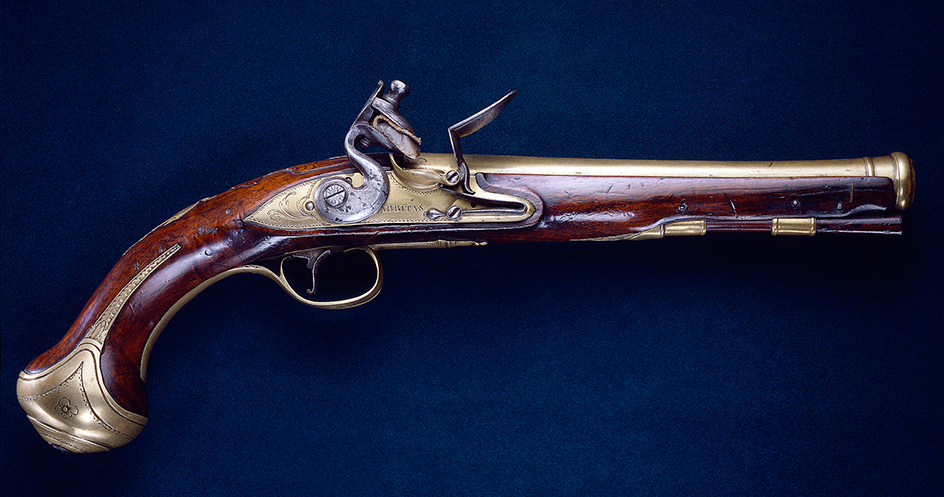
.71-caliber English flintlock pistol owned by George Washington
Thomas Jefferson, rivaling Theodore Roosevelt in firearms expertise, championed both recreational shooting and citizens' right to bear arms. He played a crucial role in advancing firearms manufacturing by introducing the concept of interchangeable parts to American gunsmiths after meeting French gunmaker Honoré Blanc. Jefferson's influence extended beyond ownership—he advocated for firearms education among youth and authored Virginia's constitutional provision protecting citizens' right to bear arms.
Andrew Jackson, famous for his dueling history, owned several notable firearms, including Washington's former Lafayette pistols. Though stories of his hundred-plus duels are likely exaggerated, his famous 1806 duel with Charles Dickinson demonstrated his resolve—Jackson fatally shot his opponent despite himself being shot in the chest, carrying that bullet for the rest of his life.
Presidential Innovation and Testing
Abraham Lincoln made history by test-firing the Spencer Rifle on the White House lawn in 1863, and owned a gold-plated Henry Repeating Rifle (Serial No. 6). This hands-on demonstration of new military technology showed Lincoln's personal interest in arming Union forces with the most effective weapons available. The Spencer Rifle test was particularly significant as it helped reverse Lincoln's initially poor opinion of the weapon, leading to its adoption by Union forces.
Ulysses S. Grant, both President and NRA President, owned a specially engraved Smith & Wesson Model Number 1½ .32 rimfire revolver, presented to him in 1870. The weapon, complete with pearl grips and gold inlay, represented the finest in American gunsmithing of the period and remains one of the most well-documented presidential firearms, with its provenance verified through factory ledgers and family correspondence.
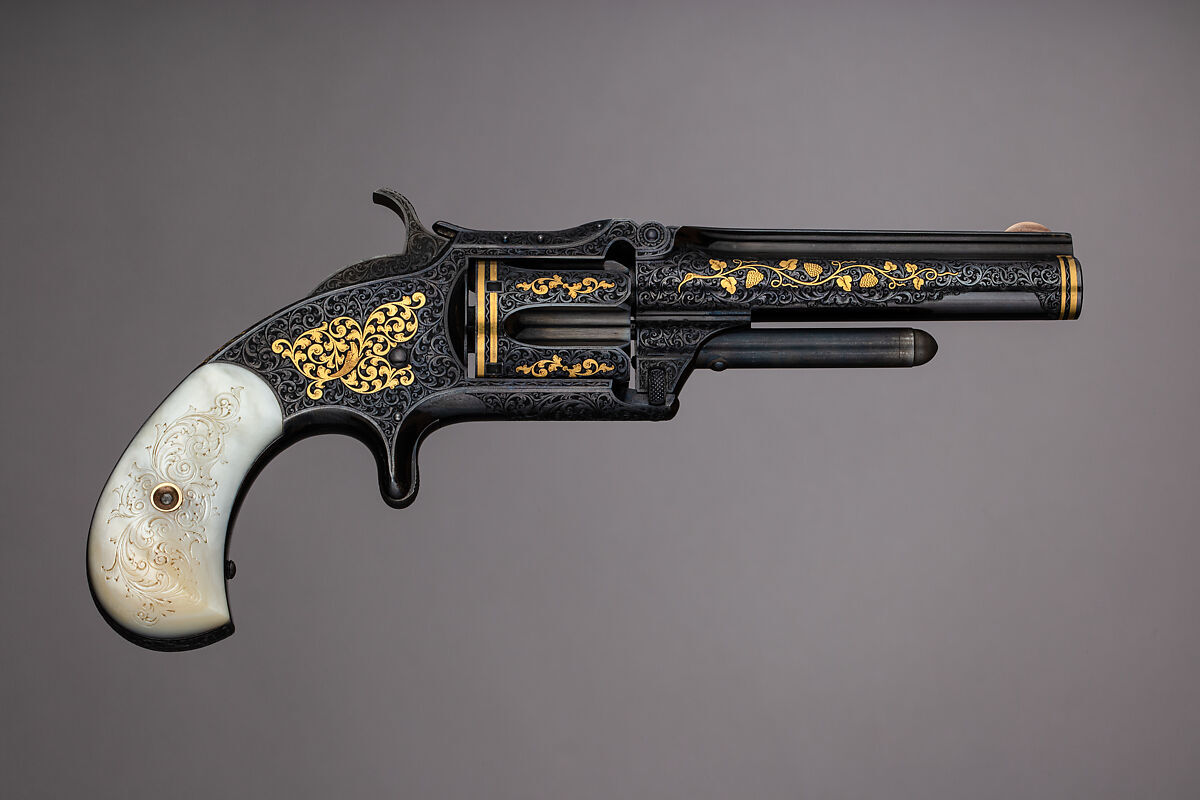
Smith & Wesson Model Number 1½ .32 rimfire revolver, owned by President Grant
Later Presidential Collections
Theodore Roosevelt, perhaps the most gun-savvy president, maintained an extensive collection. Notable pieces included his Frederick Adolph .450-500 NE rifle and his "nightstand" gun—a pearl-handled FN/Browning Model 1899 .32 auto kept at both the White House and Sagamore Hill. His reputation as both hunter and conservationist helped shape American wildlife management practices that continue to influence hunting regulations today.
Dwight Eisenhower's collection featured a specially engraved Winchester Model 21 shotgun, gifted by Coca-Cola president Bob Woodruff, which his wife Mamie later donated to the NRA Museum. Eisenhower's passion for shooting was evident in the skeet house he built at his Gettysburg farm, where he often entertained guests and fellow enthusiasts.
John F. Kennedy owned a customized M1 Garand, paying full price ($169) for a presentation-grade weapon that was accurized by the Army's top marksmen. His appreciation for firearms extended to hosting shooting events at Camp David, where he entertained guests at the trap range. Ronald Reagan received a custom flintlock longrifle after the 1981 assassination attempt, symbolizing both the resilience of the president and the enduring American tradition of firearms craftsmanship.
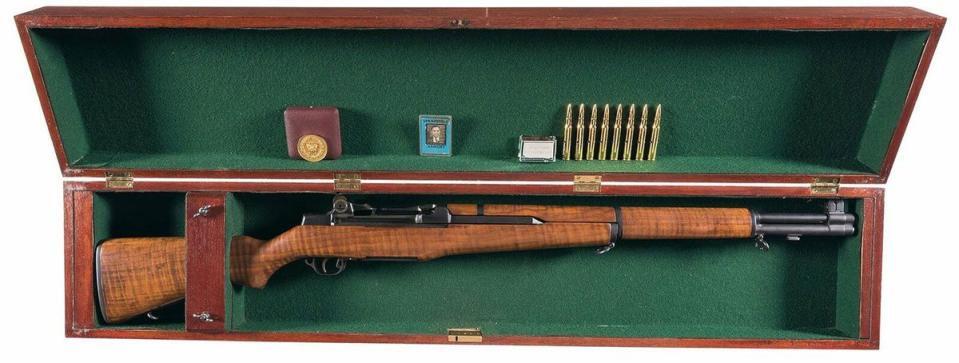
John F. Kennedy owned a customized M1 Garand
Modern Evolution
The presidential relationship with firearms has evolved significantly over time. From Washington's ceremonial pieces to Roosevelt's hunting rifles, these artifacts tell a unique story of American leadership and cultural values. Early presidents often viewed firearms as tools of both sport and necessity, while later leaders increasingly had to balance traditional firearms heritage with changing political attitudes.
Today, while the relationship between presidents and firearms has become more politically charged, these historical collections remain important artifacts of American presidential history. They serve as tangible reminders of how the nation's highest office has intersected with one of America's most enduring constitutional rights and cultural traditions.