Florida Democratic Leaders Challenge Recent Open Carry Court Decision
Author: Marko L. | Publish Date: Sep 22, 2025 | Fact checked by: Aleksa Miladinovic
Legal Victory Sparks Political Controversy
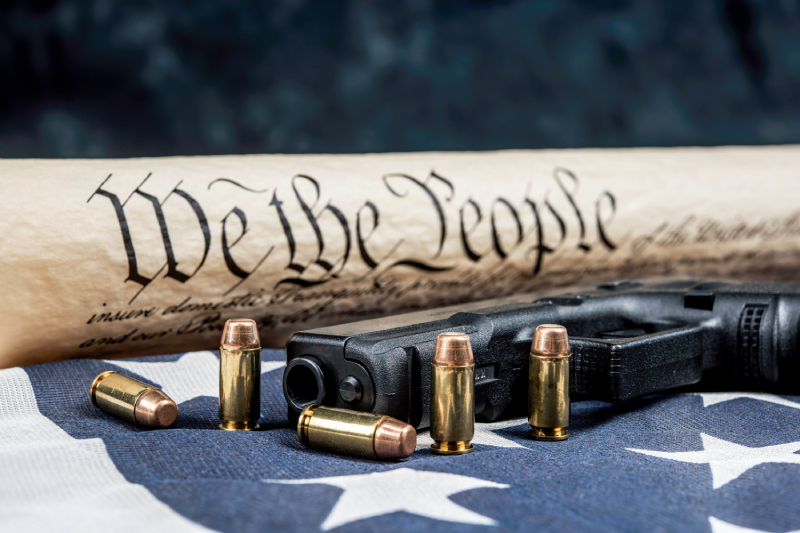
The recent judicial ruling that struck down Florida's prohibition on open carry has created a sharp divide in state politics. While Second Amendment advocates are hailing the September 10 decision by Florida's First District Court of Appeals as a constitutional victory, Democratic leaders across the state are voicing strong opposition to what they view as a dangerous precedent.
The appellate court determined that Florida's open carry restrictions violated citizens' Second Amendment protections, leading to the reversal of a conviction in the case that brought the matter before the court.
Attorney General's Response Solidifies Ruling
Following the court's decision, Florida Attorney General James Uthmeier took decisive action on September 15 by issuing official guidance to law enforcement agencies and prosecutorial offices throughout the state. In his correspondence, Uthmeier clarified that "no Florida court will any longer be empowered to convict a defendant" under the previous ban, and announced that his office would cease defending prosecutions based on the overturned statute.
This official stance effectively implemented the court's ruling across Florida's legal system, marking a significant shift in how the state approaches open carry laws.
Democratic Opposition Voices Concerns
Party Leadership Responds
Among the most prominent critics of the ruling is Florida Democratic Party Chair Nikki Fried, who issued a comprehensive statement through the party organization expressing her disapproval of the court's decision.
"I have a long history advocating for the rights afforded in the Second Amendment and have previously petitioned Courts to uphold those rights for all citizens," Fried stated. "However, I strongly believe that the First District Court of Appeals has erred in its recent opinion, which paves the way for open carry in the State of Florida."
Safety Concerns Raised
Fried's criticism extended beyond legal disagreements to encompass broader public safety implications. She referenced various armed incidents that have occurred nationwide, though without establishing direct connections between these events and legal open carry practices.
"This is a moment in history when we need to promote safer environments, not embolden those who could abuse the ruling's intent to sow seeds of terror," she argued. "We strongly encourage law enforcement to wait for a final legal judgment before allowing open carry, as it may cause confusion that leads to danger at a time when calm and clarity are so desperately needed."
Long-term Impact Predictions
The Democratic Party Chair concluded her statement with warnings about potential consequences for Florida communities.
"Historically, the Florida Sheriffs Association, many departments across the state, and leaders on both sides of the aisle have agreed: open carry will make Floridians less safe," Fried declared. "The impact of this decision will have negative long-term effects on our communities and further erode Floridians' trust in one another."
National Context of Open Carry Laws
The controversy over Florida's ruling takes place against a backdrop where open carry is already legal in the vast majority of American states. Currently, 47 states permit some form of open carry, leaving only three states—California, Connecticut, and Illinois—that maintain comprehensive prohibitions on the practice.
This statistical reality adds another dimension to the debate, as Florida would be joining the overwhelming majority of states that allow citizens to openly carry firearms rather than breaking new ground in gun rights expansion.
Author:
Marko Lalovic

Marko is a dedicated aviation enthusiast whose passion began with an unforgettable encounter with fighter jets at an air show in his home country. As an audiophile and sound engineer by training, Marko was initially captivated by the distinctive sonic signature of military aircraft—the thunderous roar of afterburners and the precise mechanical symphony of aviation systems. This auditory fascination evolved into a comprehensive interest in defense technology, particularly firearms engineering and ballistics acoustics.