California Expands Its Ghost Gun Crackdown - New Enforcement Measures Take Effect January 1, 2026
Author: Aleksa M. | Publish Date: Dec 28, 2025 | Fact checked by: Marko Lalovic
California isn’t easing off the throttle. It’s pressing harder.
With minimal public debate and little legislative hesitation, the state is preparing to implement another major expansion of its ghost gun enforcement framework—one that goes well beyond unfinished frames and receivers. The new measures reach into firearm barrels, accessories, digital design files, and even how consumers are warned and notified.
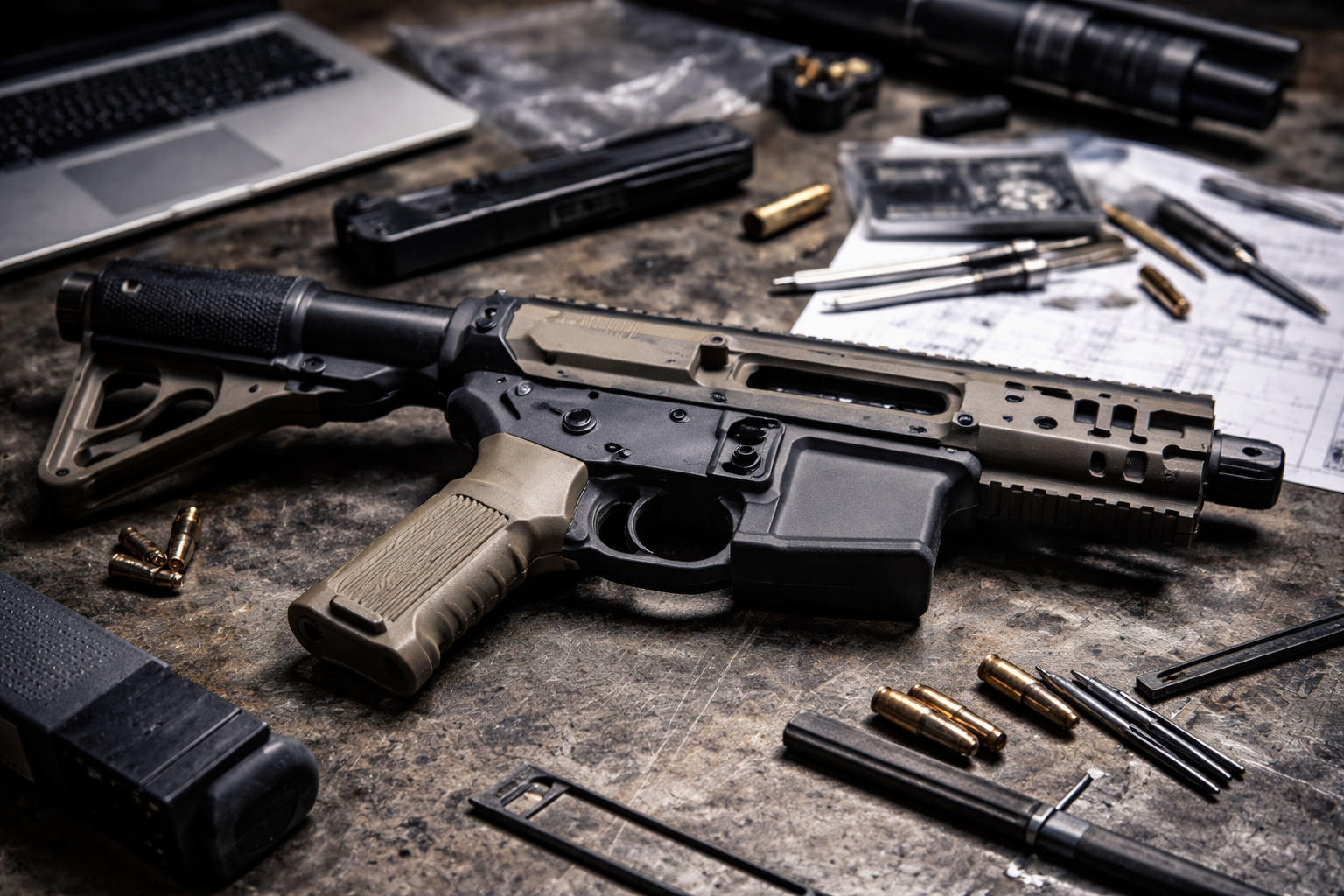
This latest push isn’t being marketed as gun control. Instead, state officials are positioning it as a matter of “consumer protection.”
The California Attorney General has issued a new informational bulletin detailing two laws scheduled to take effect on January 1, 2026. Taken together, they significantly broaden the state’s authority over firearm-related products and the individuals and businesses connected to them.
If the assumption was that California had already exhausted its options on ghost gun regulation, this represents the next phase.
The New Laws Coming Online
The bulletin outlines Assembly Bill 1263 and Senate Bill 704, both enacted in 2025 and set to become enforceable in 2026.
According to the Attorney General’s office, the stated objectives are increased transparency and accountability. In practical terms, the legislation expands legal exposure, reworks how firearm-related items are defined, and introduces new civil and criminal penalties.
These consequences don’t stop at manufacturers or retailers. Anyone alleged to have played a role in facilitating firearm manufacturing may now fall within the scope of enforcement.
State officials continue to frame ghost guns as a growing, industry-driven public safety problem—even as California already maintains some of the strictest firearm manufacturing and possession laws in the United States.
Redefining What Counts as “Firearm-Related”
One of the most consequential aspects of the new laws is how they broaden key definitions.
Under the updated framework:
-
The statutory definition of a firearm accessory is expanded
-
A new category for firearm manufacturing machines is introduced under the Firearm Industry Responsibility Act
-
Firearm barrels are separated out and subjected to their own regulatory treatment
Once a product falls under any of these classifications, it becomes subject to a range of compliance obligations. These include identity and age verification requirements, mandated consumer warnings, and increased exposure to liability if the product is later misused.
The focus is no longer limited to unfinished receivers. The regulatory scope is expanding in a deliberate, step-by-step manner.
New Compliance Obligations for Sales
Starting January 1, 2026, licensed firearm dealers and other sellers will be required to comply with additional rules when selling covered products. These requirements apply across newly defined categories, including barrels and certain accessories, and trigger enhanced oversight and documentation expectations.
The result is a wider enforcement net that touches more transactions and more components than before.
Liability Extends Beyond the Act of Manufacturing
The legislation also introduces new criminal offenses and civil causes of action related to unlawful firearm manufacturing.
Covered conduct includes:
-
Assisting another individual in illegally manufacturing a firearm
-
Providing or distributing digital firearm manufacturing files to unlicensed persons
-
Encouraging or causing someone else to violate California’s firearm manufacturing laws
Certain firearm-related convictions now carry an automatic 10-year prohibition on possessing or acquiring firearms and ammunition.
The statutory language is intentionally broad, giving enforcement agencies significant discretion.
A Long-Term Strategy, Not a One-Off
This bulletin does not exist in isolation.
The Attorney General has consistently treated ghost guns as a priority issue, previously backing legislation, issuing reports, supporting lawsuits, and participating in national efforts to extend regulation beyond California.
The office has also highlighted recent court rulings requiring federal oversight of partially complete AR-style receivers, as well as settlements preventing companies from selling unserialized firearm kits within the state.
The direction is unmistakable: California is moving ahead independently - and it is not finished.
What This Means Going Forward
For gun owners, manufacturers, and retailers operating in California, the implications are straightforward:
-
A broader range of products now falls under regulation
-
Additional activities are subject to criminal penalties
-
Legal responsibility is pushed further down the supply chain
-
Enforcement efforts are expected to increase
Nationally, California continues to function as a policy testing ground—not only for firearm regulation, but for how expansively a state can assert regulatory authority under the banner of public safety and consumer protection.
Whether these laws withstand future court challenges remains uncertain. What is certain is the timeline: January 1, 2026, is when the new rules officially take effect.
Author:
Aleksa Miladinovic

Aleksa Miladinovic is a passionate technology enthusiast born and raised in Serbia, whose interest in defense technology was sparked by his country's rich firearms manufacturing heritage. His journey began when attending a Partner defense exhibition in Belgrade, where he was captivated by the innovative engineering and precision mechanics behind modern defense systems. With Serbia being a significant producer of military equipment in the region, Aleksa has developed a deep appreciation for the technical advancements and engineering excellence that the firearms industry represents.