ATF Leadership Change: Kash Patel Takes Dual Role as Acting Director
Author: Nick Miles | Publish Date: Feb 27, 2025
In a significant development for federal law enforcement, Kash Patel has assumed the position of acting director at the Bureau of Alcohol, Tobacco, Firearms and Explosives (ATF) as of February 24, 2025, according to recent updates on the agency's official website. This appointment comes shortly after Patel's swearing-in as FBI director, creating an unprecedented scenario where he simultaneously leads two major Department of Justice agencies.
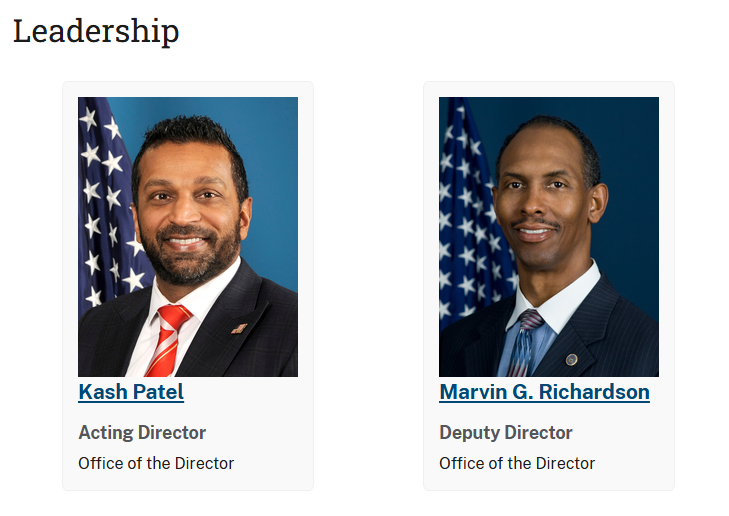
The BATFE, which employs approximately 5,500 people, is responsible for enforcing federal laws concerning firearms and explosives, issuing licenses to firearms dealers, and handling regulatory responsibilities related to the National Firearms Act (NFA), machine guns, short-barreled rifles (SBRs), and any other weapons (AOWs). Despite being a fixture in the firearms regulation landscape, the agency is relatively young, established following the Gun Control Act of 1968 and the Explosives Control Act of 1970. Its primary functions include regulating firearms sales, issuing dealer licenses, and supporting law enforcement with resources like the National Integrated Ballistic Information Network (NIBIN). The confirmation of Patel's new role by Justice Department officials and his appearance on the ATF's leadership page has sparked speculation about the future direction of an agency often viewed critically by firearms enthusiasts.
Potential Impact on Firearms Regulations
This leadership transition could potentially signal shifts in ATF's regulatory approach toward issues such as background checks, suppressors, and stabilizing braces. While the agency's core mission of collaborating with local law enforcement to combat illegal trafficking of firearms and explosives remains unchanged, Patel's dual leadership role raises questions about resource allocation and inter-agency cooperation on firearms-related cases.
Legally, Patel's appointment as acting director complies with federal provisions allowing temporary leadership appointments during vacancies. The previous ATF Director had advocated for consistent leadership to maintain the agency's standing with Congress and the executive branch. However, whether President Trump intends to nominate a permanent director or maintain Patel's dual-agency role remains uncertain.
Organizational Challenges and Possibilities
From an administrative perspective, this dual leadership arrangement presents several complexities. Some analysts suggest it might be logical to transfer ATF's firearms and explosives responsibilities to the FBI, which already handles major criminal investigations, while shifting alcohol and tobacco regulation to the Drug Enforcement Administration (DEA) with its regulatory expertise in controlled substances. However, this restructuring presents challenges since the FBI's institutional focus lies in investigations rather than regulatory oversight or revenue collection—functions that are central to ATF's operations.
The prospect of abolishing the ATF altogether, though occasionally proposed, faces significant practical hurdles. Without repealing underlying legislation like the Gun Control Act or Explosives Control Act, eliminating the ATF would create substantial administrative challenges. For example, managing essential processes like approving import permits for firearms and explosives would require reassignment to other agencies. This is further complicated by the current division of responsibilities, where agencies like the State Department already share authority over firearms imports and exports.
An alternative approach might involve transforming the ATF into a purely regulatory body focused on licensing, inspections, and rule-making, while integrating its special agents into the FBI. However, requiring the FBI to manage additional responsibilities such as issuing Federal Firearms Licenses (FFLs), Special Occupational Tax (SOT) registrations, or overseeing Industry Operations Investigators (IOIs) could potentially divert resources from its primary investigative mission targeting active criminals.
Broader Implications
This restructuring could ripple through the Justice Department, where both agencies operate. While Patel's dual appointment appears legally sound, it may attract scrutiny from Congress or oversight bodies like the U.S. Government Accountability Office. Related entities such as the Alcohol and Tobacco Tax and Trade Bureau in the Treasury Department could also experience effects from potential policy shifts at ATF, particularly given their shared historical origins before ATF's 2003 transfer to the Justice Department.
As this situation unfolds, observers are watching closely to see how these changes will affect the ATF's operations, gun owners' interests, and inter-agency dynamics. The complex web of responsibilities currently assigned to the ATF cannot be easily redistributed without widespread consequences. For now, the ATF continues its current functions, including processing Form 4 applications, while stakeholders await further announcements from the administration or congressional action to clarify the agency's future direction.